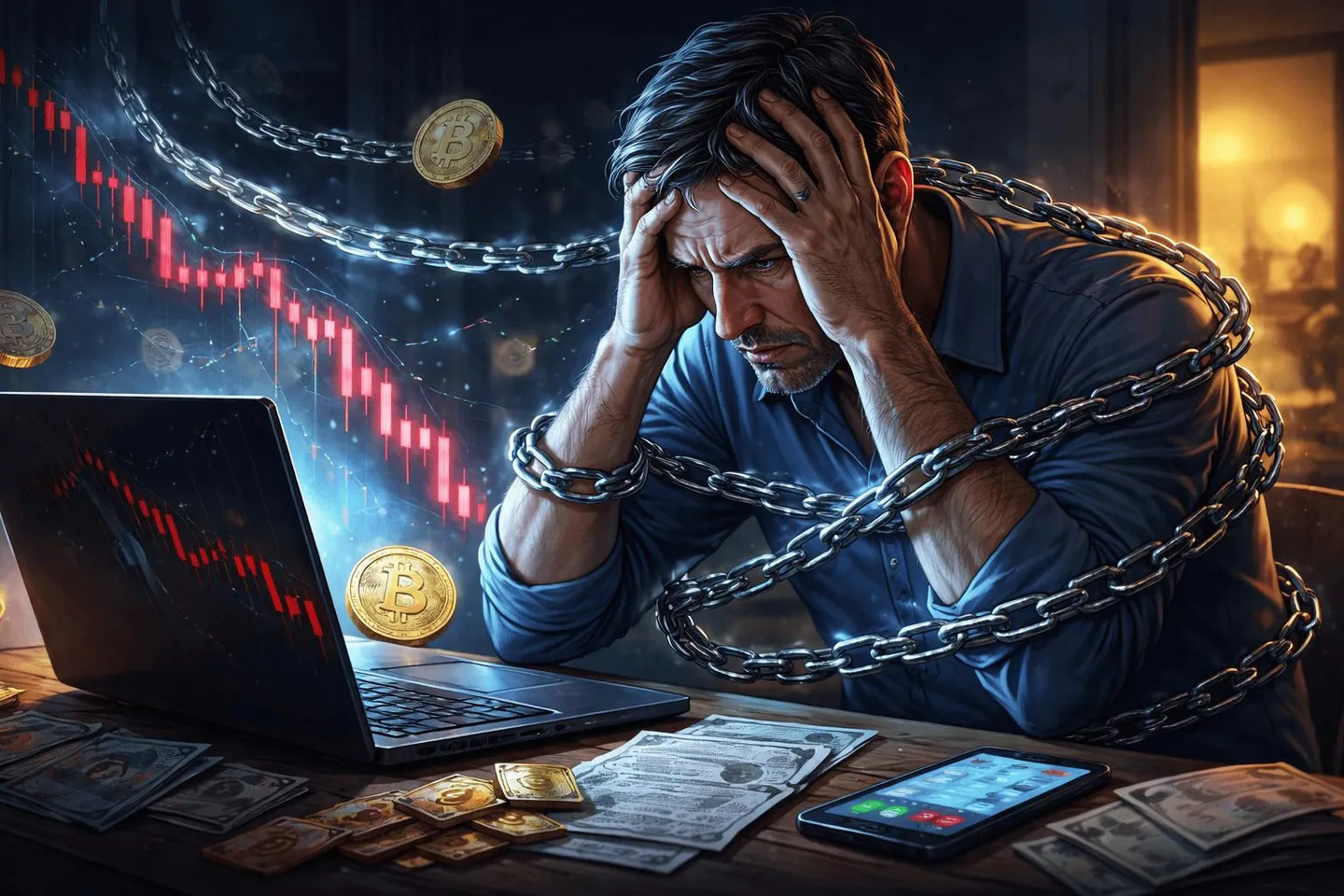
He Wasn’t Trying to Make Money Anymore. He Was Trying to Get His Money Back.
Alex invested $10,000 in a promising crypto project.
The team looked credible. The roadmap was ambitious. Influencers were bullish. And the token was trading at $2.
For a while, everything went according to plan.
Then the market turned.
His investment dropped to $6,000. The price was too low to sell now.
It fell to $3,000. Surely, a project with this much potential couldn’t stay undervalued forever.
A few months later, his position was worth just $1,000.
Alex had stopped researching new opportunities. He ignored better investments. Every day, he checked the same token, waiting for the one green candle that would make everything right again.
When a friend asked why he didn’t sell, Alex answered:
“I’ve already lost $9,000. I’m not going to sell now.”
But there was a problem with his reasoning.
The $9,000 was already gone. Holding the token wouldn’t bring it back. Only the token’s future performance could justify keeping it.
Alex wasn’t evaluating an investment anymore. He was trying to undo the past.
And the market didn’t care.
The psychological trap
This is the Sunk Cost Fallacy: allowing resources already spent—money, time, or effort—to influence a decision that should be based on future costs and benefits.
In crypto, it often appears as averaging down without a fresh investment thesis, refusing to sell a fundamentally broken token, or holding a losing position simply to avoid admitting a mistake.
The trap becomes even stronger when investors attach their identity to their predictions. Selling doesn’t just feel like losing money. It feels like admitting they were wrong.
The lesson
Ask yourself one question:
“If I had this money in cash today, would I buy this token at its current price?”
If the honest answer is no, your original purchase price may be controlling your decision.
That doesn’t automatically mean you should sell. It means you should reassess the investment using current evidence, future prospects, risk, and alternative opportunities—not the money you’ve already lost.
Your entry price is part of your history. It is not a promise from the market.