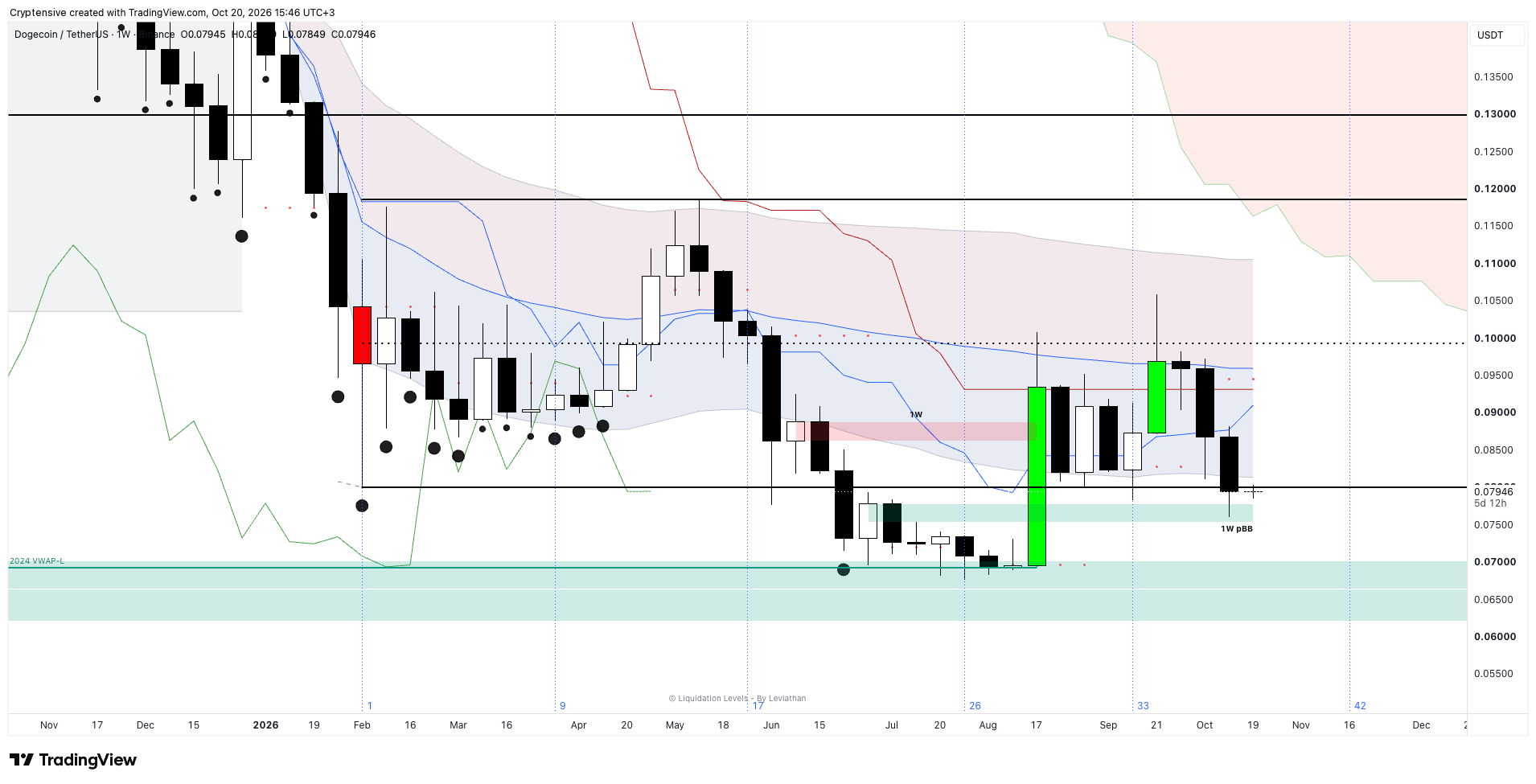
Overview
Dogecoin started as a joke. In December 2013, two software engineers, Billy Markus and Jackson Palmer, created it to poke fun at the wave of copycat cryptocurrencies appearing at the time. They named it after “Doge”, a viral internet meme of a Shiba Inu dog.
The joke took on a life of its own. A friendly community grew around DOGE, using it to tip content creators online and to fund causes such as the Jamaican bobsled team at the 2014 Winter Olympics. Today Dogecoin is the largest meme coin and one of the 15 biggest cryptocurrencies, worth around $12 billion.
There is no company behind it. The non-profit Dogecoin Foundation supports development, and its commercial arm, House of Doge, works on business partnerships and products.
How it works
Dogecoin is a simple payment network, originally based on the code of Litecoin, which itself was based on Bitcoin. It uses proof of work: miners run powerful computers to secure the network and earn new DOGE as a reward.
Since 2014, Dogecoin has been merge-mined with Litecoin. Miners can secure both networks at the same time with the same equipment, which gives Dogecoin a lot of security for a small project.
A new block is added roughly every minute (Bitcoin takes ten), and fees are usually a fraction of a cent. That makes DOGE practical for small payments. What it doesn’t have is smart contracts: you can send DOGE, but you can’t build DeFi apps directly on it, like you can on Ethereum or Solana.
The DOGE token
| DOGE at a glance | |
|---|---|
| Supply (Oct 2026) | about 156 billion DOGE |
| Maximum supply | none (no cap) |
| New DOGE per year | about 5.2 billion |
| Price (20 Oct 2026) | about $0.08 |
| All-time high | about $0.73 (May 2021) |
| Market cap | about $12 billion |
Unlike Bitcoin, Dogecoin has no maximum supply. Every block creates 10,000 new DOGE, forever, which adds up to about 14 million DOGE a day and over 5 billion a year. Because the amount is fixed while the total keeps growing, the inflation rate slowly falls: it is now about 3.4% a year.
Supporters say this is a feature: it keeps DOGE a currency to spend rather than hoard, and keeps paying miners to secure the network. Critics point out that the coin needs a steady stream of new buyers just to keep its price from falling. Right now fees are tiny, so miners rely almost entirely on these new coins.
The Elon Musk factor
No other cryptocurrency is as tied to one person. Elon Musk has called Dogecoin “the people’s crypto”, and his tweets have moved its price many times. DOGE peaked in May 2021, around his appearance on Saturday Night Live, then fell sharply.
Tesla accepts DOGE for some merchandise, and in 2025 Musk’s US government cost-cutting body was even named “D.O.G.E.” after the coin. The big hope among fans is that X Money, the payment service of Musk’s social network X, will one day support DOGE. When X Money began rolling out in 2026, it did not include any cryptocurrency, and so far every price jump linked to it has been based on rumors, not announcements.
ETFs and treasury companies
Dogecoin has gained some of the same Wall Street products as Bitcoin and Ethereum:
- ETFs. Several US spot Dogecoin ETFs started trading from late 2025, including funds from Grayscale, Bitwise and 21Shares (the latter, ticker TDOG, backed by House of Doge). Demand has been disappointing: by October 2026, US spot DOGE ETFs held only about $13 million in total, with flows near zero on most days.
- Treasury companies. In 2025, House of Doge partnered with the listed company CleanCore to build a corporate DOGE reserve, starting with $175 million. In 2026 the SEC cleared House of Doge to raise up to $100 million more in the future.
Security and reliability
The Dogecoin network itself has a solid record. It has run for over a decade with no major hacks of the protocol, and merge-mining with Litecoin makes attacks expensive. Its code changes slowly and cautiously.
The main risks are about the coin, not the network:
- Hype-driven price. DOGE’s price depends heavily on social media, celebrity attention and market mood. It is down almost 90% from its 2021 high.
- Concentration. A small number of wallets, many of them exchanges, hold a large share of all DOGE.
- Low real use. On a typical day in October 2026, the whole network paid only a few hundred dollars in fees, a sign that DOGE is held and traded far more than it is used.
Dogecoin vs. the competition
| Dogecoin | Shiba Inu | Bitcoin | |
|---|---|---|---|
| Launched | 2013 | 2020 | 2009 |
| Type | Own blockchain | Token on Ethereum | Own blockchain |
| Supply | No cap, ~3.4% inflation | Fixed, with token burns | Fixed at 21 million |
| Smart contracts | No | Yes (via Ethereum / Shibarium) | No |
Shiba Inu is Dogecoin’s main meme-coin rival and has built more of its own ecosystem. Bitcoin is the serious version of what Dogecoin copies: a fixed supply and far deeper adoption. Dogecoin’s edge is its brand: it is the meme coin everyone has heard of.
Our verdict
Dogecoin is the original meme coin, and its staying power is impressive: more than a decade later, it is still one of the largest cryptocurrencies, with a working network, ETFs and a devoted community.
But you should be clear about what you are buying. DOGE has no supply cap, little everyday use and no cash flows, and its price moves mostly on attention, especially from Elon Musk. A future integration with X could change that story, but there is no sign of it yet. DOGE is a high-risk speculation: if you buy it, use only money you can afford to lose entirely.
This review is for information only and is not financial advice.